Thalassotopias: Charting the Subversive Oceanic Architecture of the Transatlantic Sixties
ACUH seminar with Janno Martens
- Date
- 12 November 2026
- Time
- 15:30 -16:30
- Location
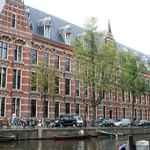
- Bushuis/Oost-Indisch Huis
- Room
- E0.02
In the 1960s, utopian architects drew up floating cities, pioneering scientists built submarine habitats, and outlaw entrepreneurs realised offshore structures. But these endeavours remain uncharted territory within architectural history, which has yet to undergo the ‘oceanic turn’ already witnessed by other disciplines in the humanities. Recognising the ocean as a place where reality and imagination interact, the project approaches oceanic architecture both as actual, physical places (literal topoi) and as mythical, literary motifs (literary topoi). To signify this double modality, Janno refers to oceanic architecture as thalassotopias, a neologism derived from the ancient Greek words for ‘sea’ (thálassa) and ‘place’ (tópos).
Janno Martens approaches the history of architecture first and foremost from the perspective of environmental dynamics. Focusing on the period between 1960 and 2000, his research relates the design of the built and natural environment to the significance of psychological and technological environments. Janno studied philosophy and architectural history at the University of Amsterdam. After working at RAAAF [Rietveld Architecture-Art-Affordances] and the Jaap Bakema Study Center, he did his doctoral studies at KU Leuven's Faculty of Architecture (campus Sint-Lucas, Brussels), where he is currently an FWO postdoctoral fellow. Janno also works of freelance research associate and curator for the Flanders Architecture Institute (VAi), where he focuses on the historical relation between software and design.